Teacher marked it
It checks every mark against the answer, then names the cause behind the ones the ticks do not explain.
Photograph one paper. Marked by a teacher, unmarked, or still blank. SnapYays reads every question, shows where the marks went, points at the likely cause, then builds practice from your own mistakes.
Free allowance every monthNo cardYour photos stay yours
Nothing here says you cannot do the maths.
Cause found. Two drills are ready.
See how to fix itIf one of them is yours, you already know the grade is not the problem.
“She knows the maths. She still loses the marks.”
“I paid for tutoring. The grade did not move.”
“He says he is fine. The paper says otherwise.”
Marks rarely go missing because a child cannot do the topic. They go missing in the same two or three places, again and again, paper after paper.
That is not a knowledge problem. It is a leak. And a leak has an address.
A mark can only be lost at one of five points on a page. Read the question. Choose a method. Do the arithmetic. Write it down. Check it.
We did not invent five categories. We catalogued the typical errors on 544 topics across nine exam systems, then grouped them by where the mistake happens, not by what topic it is about.
That is why the same five words work for a Grade 8 test and for AP Calculus. And why a report can say something a mark scheme cannot.
Tutoring teaches you more. We stop you losing what you already know.
Most tools need a clean, printed, unmarked paper. Real papers are not clean. This is the part everyone else skips.
Teacher marked it
It checks every mark against the answer, then names the cause behind the ones the ticks do not explain.
Only a total score
One number on the front page is enough. It works back to which questions went wrong, and how.
Completely blank
Nothing written, nothing marked. It reads the questions and tells you which ones will cost you, and why.
Six pages, one paper.
Photograph page by page. It stitches them back into a single paper before it reads anything.Here is one cause, pulled apart. It is the one parents never see, and the one that costs the most marks in a written paper.
You reach the right structure. Then you stop before the answer.
A four-line answer template. Statement, working, conclusion, check. Most students close this one in two weeks, because nothing new has to be learned.
Your leak map, this month
Five causes, ranked by how many of your marks each one took. The top one is where the next two weeks go.
A cause you cannot practise is just a label. So each miss is turned into practice that targets the exact move that failed.
Question 7, last line
The working is right. The answer never arrives.
x = 3, x = −1then stop
Same cause. New surface.
Same trap, different numbers, different wording. You are not redoing the topic. You are redoing the exact move that failed.
Until it is gone
Answer it right once, it leaves.
The list gets shorter. That is the whole reward system, and it is enough.
No badges, no leaderboards, no streak guilt. The only number that moves is the number of questions left. When it hits zero, you are done for the day.
More practice on the wrong thing is just more time spent. Two questions aimed at the real miss beat twenty aimed at nothing.
The fastest way to lose a student is to hand them more homework. So we did the opposite.
You are not behind. You are leaking. Fix the leak and go live your life.
The same paper, marked twice. Once by a grade, once by cause. Only one of them tells you what to do on Monday.
“A B+ isn’t a verdict. It’s eleven marks.”
Honours, AP, the college that says yes: those doors open on marks from real exams — marks you already earned and did not bank.“The difference between a 6 and a 7 isn’t intelligence.”
Sixth form, Russell Group, the offer letter. Each one starts with a real exam grade, and one grade is a handful of marks.A term, in two picturesDay 1 → Day 90
Same five causes, closing in the order we always recommend: the two-week ones first. A mark that comes back in a fortnight is what keeps a student going.
Every AI product promises accuracy. The honest question is what happens on the bad photo, the faint pencil, the page half in shadow. That is where trust is made or lost.
Unclear photo
It says so, and asks for another.
A blurred line is not read as a wrong answer. Nothing is invented to fill the gap. You get a retake, not a guess.
No score on the paper
No score in the report.
If your paper has no total, we do not manufacture one. The score fields simply do not appear.
Your data
Yours, and deletable in one tap.
Photos are processed to review the paper. Nothing is published, nothing is sold, and everything can be deleted from inside the app.
The model works one document at a time and produces study suggestions. Nothing it says about a single answer is a verdict about the student.
What the model does
Reads the pages you upload
It transcribes the questions and your answers, estimates where marks were lost, and groups those losses by likely cause.
What it never does
Grades you for school
No official grades, no ranking, no comparison with other students, and no report sent to a school.
No automated decisions
Nothing is decided about you
No machine makes a decision with legal or similarly significant effects about you. Admission, placement, streaming and discipline stay with people.
Human review
Every mark can be queried
Disagree with an output? Query it in the report or email [email protected]. If we got it wrong, we correct it and say so.
Different children, different subjects, the same discovery: the marks were never missing for the reason they assumed.
“I was sure she was weak at algebra. The first report showed she solves it correctly and stops one line before the answer. That is a different problem, and a different conversation at the kitchen table.”
 Mother of a Grade 9 student
“Every app I tried before this only marked the paper. What changed things was seeing the same cause on four papers in a row. You cannot argue with that, and neither could he.”
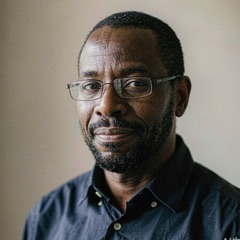 Father of a Grade 11 student
“Fifteen minutes on the questions I actually got wrong is worth more than an hour of worksheets. I never have to explain what I am bad at. It already knows.”
 Grade 12 student
“I mark thirty papers a week, so I see the pattern across a class. I cannot do that for one child at nine at night. This is the part I could not do myself.”
 Secondary maths teacher
SnapYays costs $16 a month and reads eighty pages in it, about twenty-six papers. Work out which one your money should be doing.
Free allowance every month, no card Cancel in two taps Prices in USD, tax where it applies Every plan is used in the app — get it
This page is where you choose a plan. The camera, the paper review and the daily fifteen minutes live in the SnapYays app. Install it once and the first paper takes about four minutes.
No plan needed to install. Pick one inside the app, or stay on the free allowance for as long as you like.
Point a phone camera at a code, or send this page to the phone that will do the scanning.
You do not need to believe any of this page. Photograph the last paper you got back, and read what it says about the marks you lost.
Short answers. No asterisks.
Free allowance every month, no card. One paper is enough to see whether this page is right.
ChatGPT answers one question at a time. SnapYays reads the whole paper, tells you why each mark went missing, and builds practice from your own mistakes. One is a search box. The other is a review of your own paper.
It estimates marks to the method, not just the answer: a correct final answer with a broken chain still loses marks, because it would in an exam. Those estimates exist to show where the marks went — they are not official grades, they are never sent to a school, and they are never used to decide anything about your child. When a photo cannot be read, it says so instead of guessing, and any mark can be queried inside the report.
No one can promise a grade, and any page that does is selling you something. What we can promise is that you will see exactly where the marks go, and that the fastest causes are usually fixable in about two weeks. The slow ones take a term.
No timer, no ranking, no extra homework. Fifteen minutes on the questions they actually lose marks on, then the app is done for the day. There is nothing to keep up with and no streak to protect.
Photos are processed to mark the paper. Nothing is published, nothing is shared, nothing is sold. Everything can be deleted from the app in one step.
No. It reviews the paper it is given and suggests what to practise. It does not issue school grades, rank students, or take any decision about admission, placement, streaming or discipline. Every output is a suggestion a person can edit, query or ignore — people make the decisions, not the model.
Every month starts with a free allowance and needs no card. Paid plans cancel in two taps, and your reports stay readable after the plan ends.
For the scanning, yes. The camera and the review engine live in the iOS and Android app. This site is where you compare plans and manage the subscription. Install it before the first paper and your free allowance is already on the account.
You can sign up, pay and read every report in a browser. Reading a new paper needs a phone camera, so that part happens in the app. The only requirement is a camera and a paper.
Maths first, Grades 7 to 12, across nine exam systems including Common Core, AP, GCSE, A-Level, IB and iGCSE. More subjects come after maths is right, not before.
Free allowance every month. No card. Get the app
 App Store
iOS 15+
 Google Play
Android 9+